Home
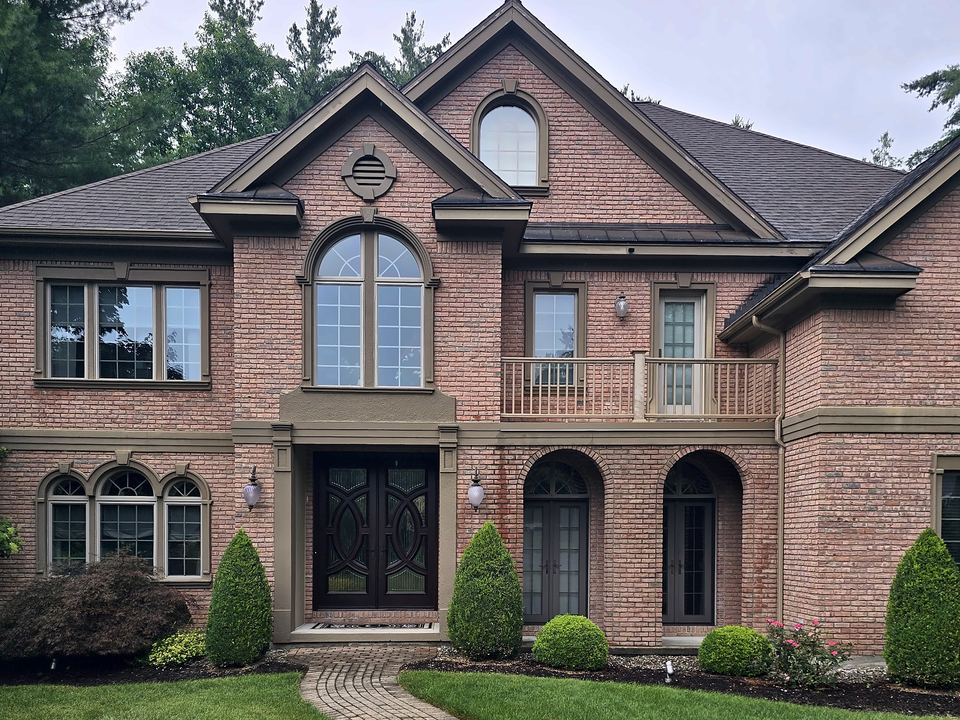
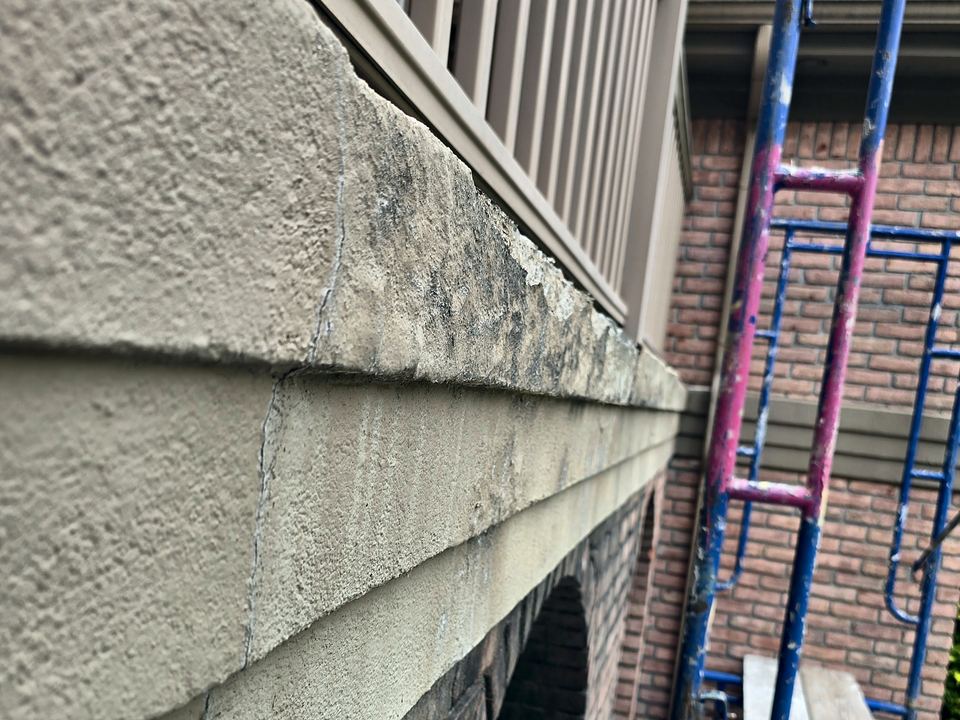
Cracked EIFS band and balcony, Schenectady home
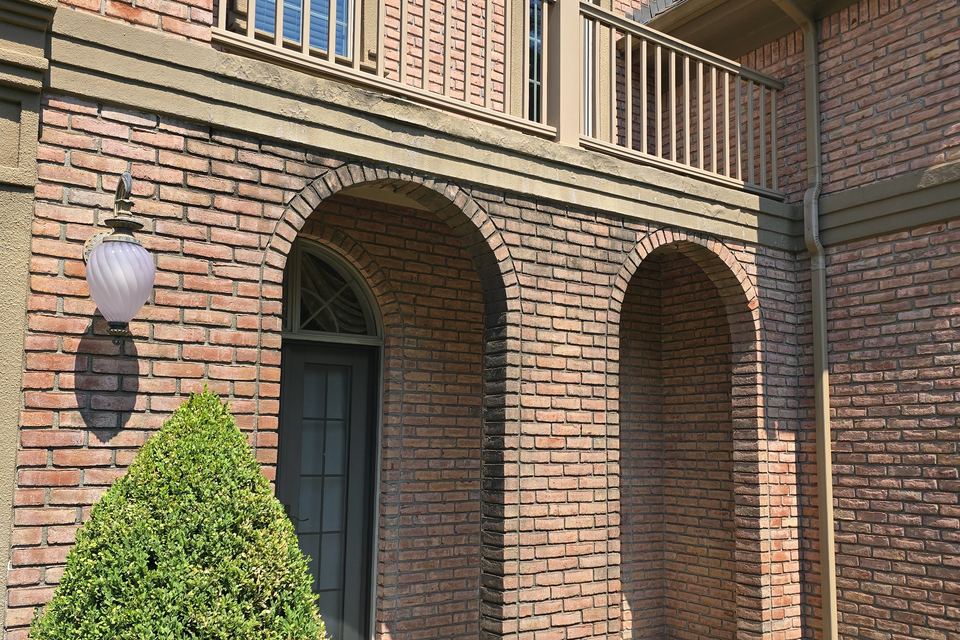
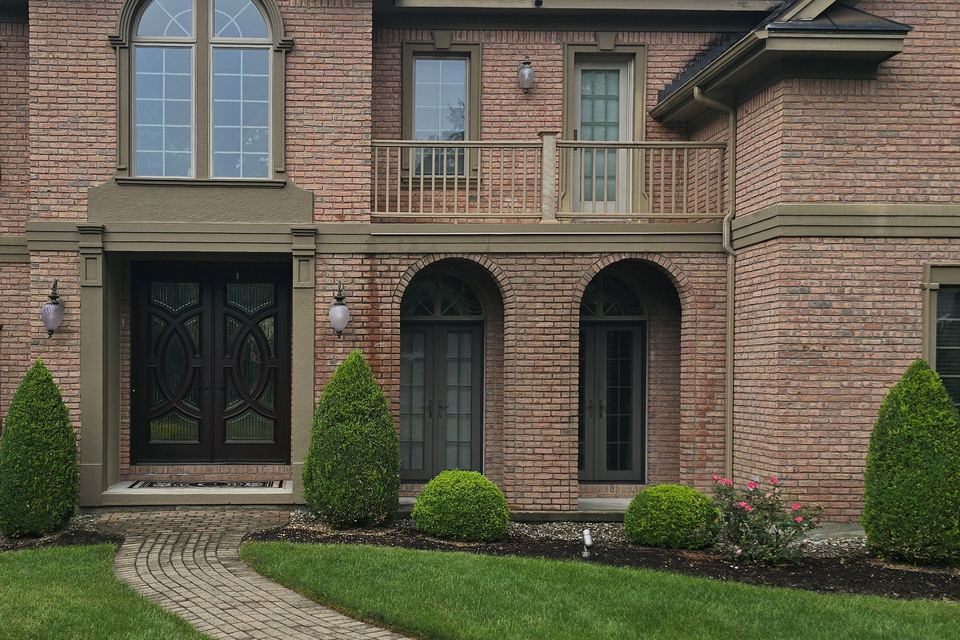
Repaired a cracked, water-damaged EIFS band, added a custom aluminum drip cap and waterproofed the balcony deck.
EIFS repair · Capital Region
Cracks, impact holes, wet spots, failed sealant and faded finish on EIFS walls, repaired properly and matched to your building.
We reply within one business day, Monday to Friday.
Updated October 2026
Short answer
Yes, most EIFS damage can be repaired without replacing the wall. We repair cracks, impact and woodpecker holes, wet areas and failed sealant on Dryvit- and Sto-type systems across Albany and the Capital Region, and we fix the detail that let the water in. Finish work needs about 40 °F and rising. Start by texting a close-up and a whole-wall photo.
Key facts
Water was getting in at a band over the front entry that had never had flashing. The band was repaired, a custom aluminum drip cap added, and the affected areas prepped and repainted.
The general order of work. The details depend on your system and on what we find once the wall is open.
Look at the whole wall, then probe the suspect spots: below window corners, at roof-wall intersections and at the base of the wall.
Remove the damaged EIFS slightly past the damage, back to dry, solid foam and base coat.
Inspect the sheathing behind the opening and let it dry. If it is soft or rotted, we show you and price its replacement before anything goes back.
Restore the weather barrier and correct the flashing, sealant or kick-out that let the water in.
New foam set flush and rasped flat, then base coat with new mesh lapped onto the existing mesh (manufacturers commonly call for about 2½ inches).
Finish tinted and textured by hand to match the wall. On a faded wall we price a recoat of the elevation as well.
Backer rod and EIFS-compatible sealant where the wall meets windows, doors and penetrations.
Almost all of it, as long as the cause is found and fixed too. EIFS (exterior insulation and finish systems, often called Dryvit after one brand) is foam insulation board under a mesh-reinforced base coat and a thin finish. That build-up repairs well in sections. We repair:
Not sure your wall is EIFS at all? Here is how to tell EIFS from stucco. Cement stucco is a different repair, covered on our stucco repair page.
Often you can't tell from the outside, which is why we probe suspect spots before we patch anything. Behind EIFS, water can rot sheathing for years without showing inside. The signs that point to it:
Look hardest at window corners, roof-wall intersections, deck ledgers and the bottom of the wall, where the EIFS should stop short of the ground. Those are the places where water usually gets in.
Because a patch over a wet wall fails again. Most EIFS damage starts where water gets behind the system: window corners, roof-wall intersections, deck ledgers and grade. Before we patch, we look at those details. If a kick-out flashing is missing or a sealant joint has failed, the repair includes fixing it. Otherwise the crack comes back.
Two 2026 jobs show what that means in practice:
A small repair on a newer wall can be blended in. On a wall that has faded for 15–20 years, a patch will show. A full recoat of the elevation, or of the whole building, gives one even color and adds a fresh weather layer. We price both so you can choose. Our Casey Stadium refinish at UAlbany is a recoat on a commercial building; the recoating page explains how it is done.
Yes, because the repair materials have to be compatible with the system already on the wall. Dryvit, Sto and Parex all make EIFS, built the same basic way. What matters most is whether your wall is an older barrier system or a drainage system, and what kind of finish it has. We identify that before we price the repair, and we rebuild with materials that suit it.
Small crack or impact repairs often fall in the hundreds to low thousands of dollars. Moisture repairs that need wall sections opened and rebuilt cost more, because the price follows how much has to come off and what is found behind it. Send photos and we'll give you a range before we visit. When a wall has failed in too many places to patch sensibly, re-cladding with drainage EIFS may be the better spend. For storefronts, apartment buildings and campuses, see our commercial EIFS work.
We price the options that make sense for your wall, so you can choose.
| Option | When it fits | How it looks | Disruption | Relative cost |
|---|---|---|---|---|
| Patch and blend | Small, recent damage on a newer wall that is dry behind | Blends on newer finishes; can show on faded walls | Smallest: one spot, little or no access equipment | Lowest |
| Repair and recoat | A sound system with weathered color and scattered cracks or impacts | One even color across the elevation | Moderate: one elevation at a time | Middle |
| Cut out and rebuild | Wet or soft substrate, or a section of the system that has failed | New layers and finish where the wall was opened; often recoated to match | Largest: wall sections opened, scaffold or lifts | Highest |
Repaired a cracked, water-damaged EIFS band, added a custom aluminum drip cap and waterproofed the balcony deck.
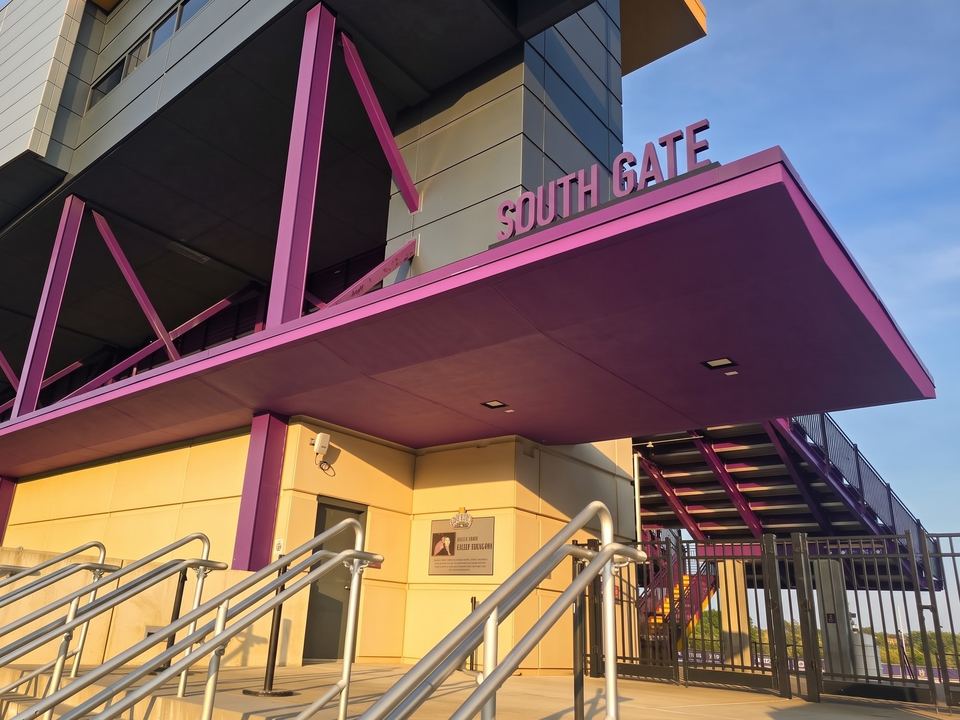
Cleaned, repaired and refinished the faded EIFS canopy soffit at the South Gate.
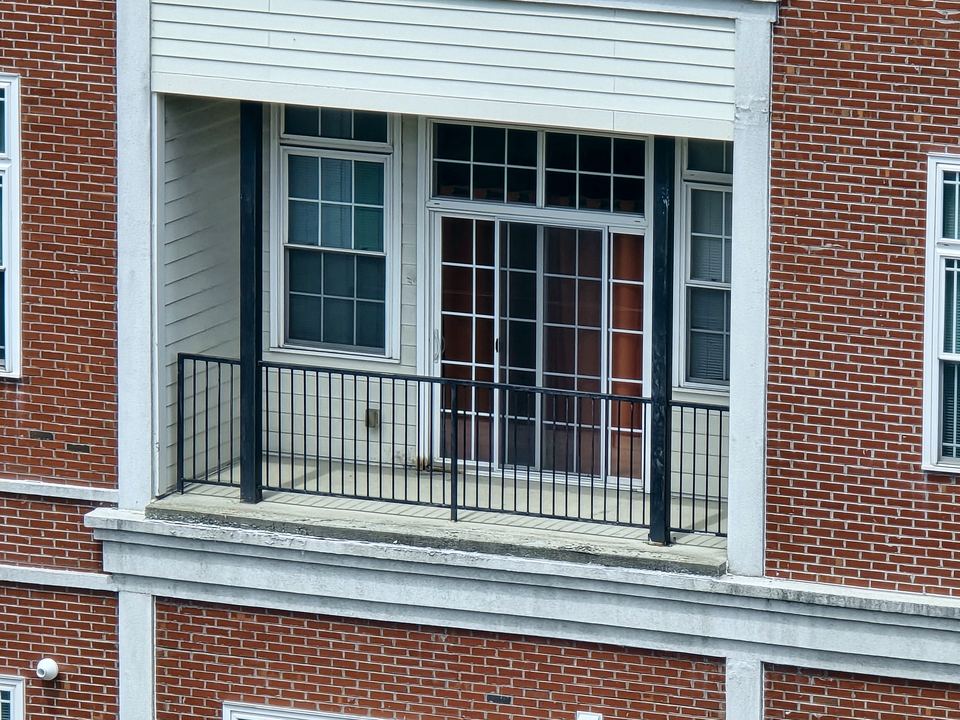
EIFS repair at a balcony underside and a reinforced liquid-applied membrane where the deck meets the EIFS, on an occupied building.
Most EIFS damage is local and can be repaired. Replacement makes sense when wet or rotted sheathing is widespread, or when an old barrier system keeps failing at its details. We probe before we recommend either, and we show you what we found with photos. When a full re-clad is the right call, a modern drainage EIFS system is the usual answer.
The usual causes are impact (ladders, hail, woodpeckers), missing diagonal mesh at window corners, foam board joints lined up with the corners of openings, movement in the building, failed sealant joints and water behind the system. The cause decides the repair: a crack from an impact needs a patch, while a crack from water or a bad detail needs that detail fixed as well, or it comes back.
We match texture by hand and tint the finish to your wall, and on newer walls the repair usually disappears. On older, sun-faded walls, recoating the full elevation is the only way to get a true match. We'll tell you which one your wall needs, and we can price both so you can see the difference before you decide.
Only as a short-term fix. Caulk over a crack can slow water down for a season, but it shows, it doesn't bond well to a textured finish, and it can hide the reason the crack opened. A lasting repair rebuilds the base coat with mesh across the crack and refinishes it. If the crack is near a window or a roof line, check for water behind it first.
Each hole is cut back to clean edges, filled with new foam, then covered with base coat, reinforcing mesh and a finish matched to the wall. Woodpecker holes let water straight into the foam, so they shouldn't wait until spring if they can be closed sooner. Birds often return to the same wall, so it is worth using deterrents once the repair is done.
We start with a careful look at the whole wall, then probe the spots where water usually gets in: below window corners, at roof-wall intersections, around deck ledgers and along the base of the wall. Where probing finds soft or wet material, we know where to open up, and the small probe holes are sealed afterward. It is a repair assessment, not a home inspection.
One close-up of the damage and one photo of the whole wall is usually enough for a first read.
When the water comes in where a roof meets the wall.
When the wall is sound but the color has faded.
Hard-coat cement stucco, chimneys and parging.
What can be done before spring, and what has to wait.
Same problem? Text a close-up and a whole-wall photo.
We'll tell you what it looks like and what the repair involves.