Public works
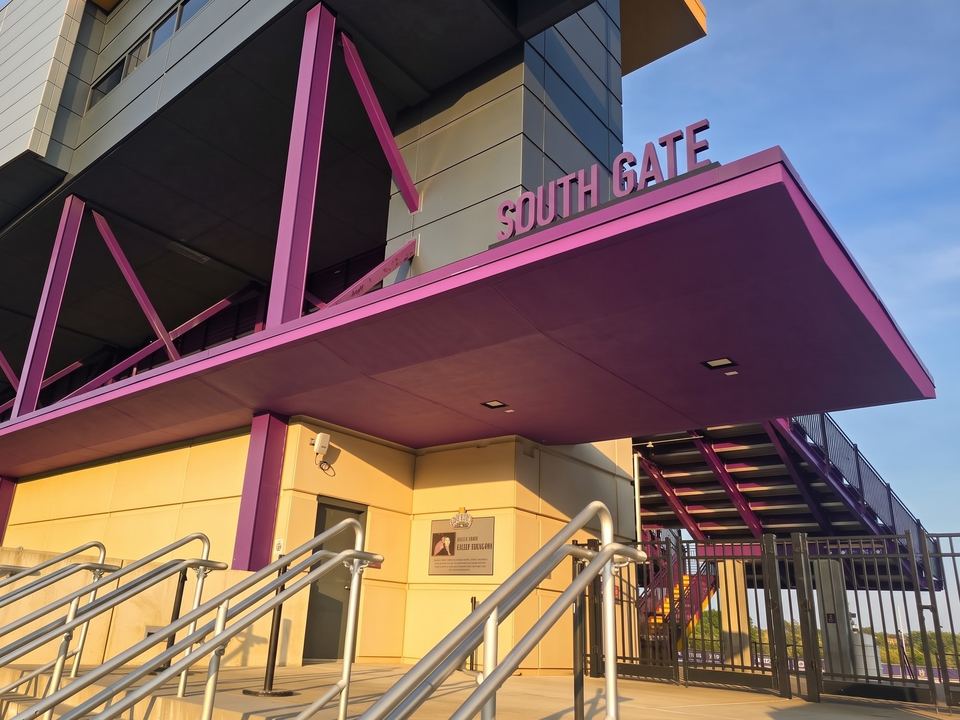
Casey Stadium South Gate, University at Albany
Cleaned, repaired and refinished the faded EIFS canopy soffit at the South Gate.
Recoating · refinishing · Capital Region
Faded, chalky, stained or patchy walls brought back to one even color, with the cracks and sealant fixed first.
We reply within one business day, Monday to Friday.
Updated October 2026
Short answer
Yes, EIFS and stucco can be recoated, but only with coatings made for the system, after gentle cleaning and crack repair. We recoat and refinish faded, chalky or stained walls across Albany and the Capital Region, one elevation or a whole building at a time. Coatings need about 40 °F and rising, with no freezing for 24 hours. Send photos of the whole wall.
Key facts
When the wall underneath is sound and the problem is how it looks. A recoat suits EIFS and stucco that have faded, turned chalky, picked up stains or patchy color, or carry old repairs that no longer blend. It gives one even color across the elevation and adds a fresh weather layer. It is the wrong fix for soft spots, bulges, open cracks or water getting in behind the wall: those are EIFS repairs or stucco repairs first, and the coating comes after.
Because the wrong coating can trap moisture or fail to bond. EIFS finishes are acrylic over foam; stucco is cement plaster. Each needs a coating that bonds to it and lets the wall dry the way the system was designed to, which is why we check the product against the system on your wall before anything is applied. Elastomeric coatings are thick and flexible and suit stucco with lots of fine hairline cracks; on EIFS, only an elastomeric compatible with the system belongs on the wall. Very dark colors are limited on EIFS, because they can overheat the foam in direct sun.
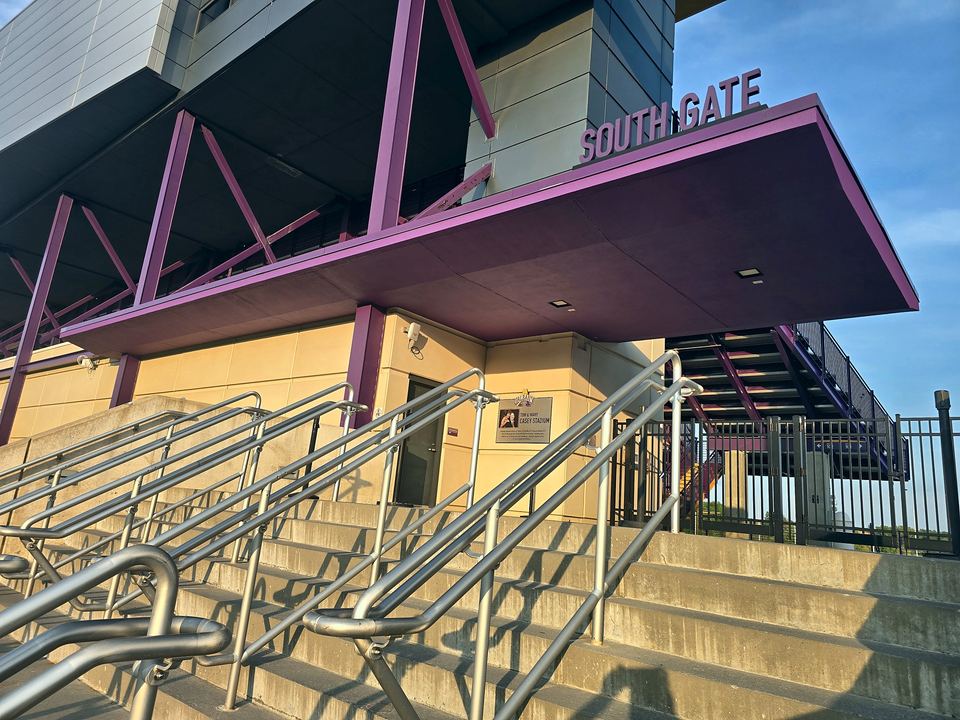
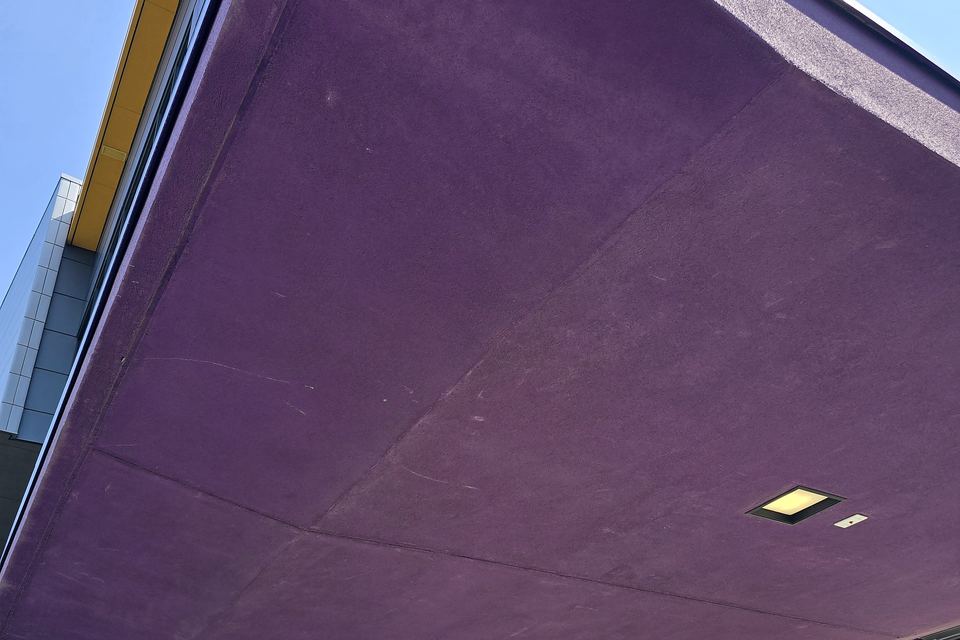
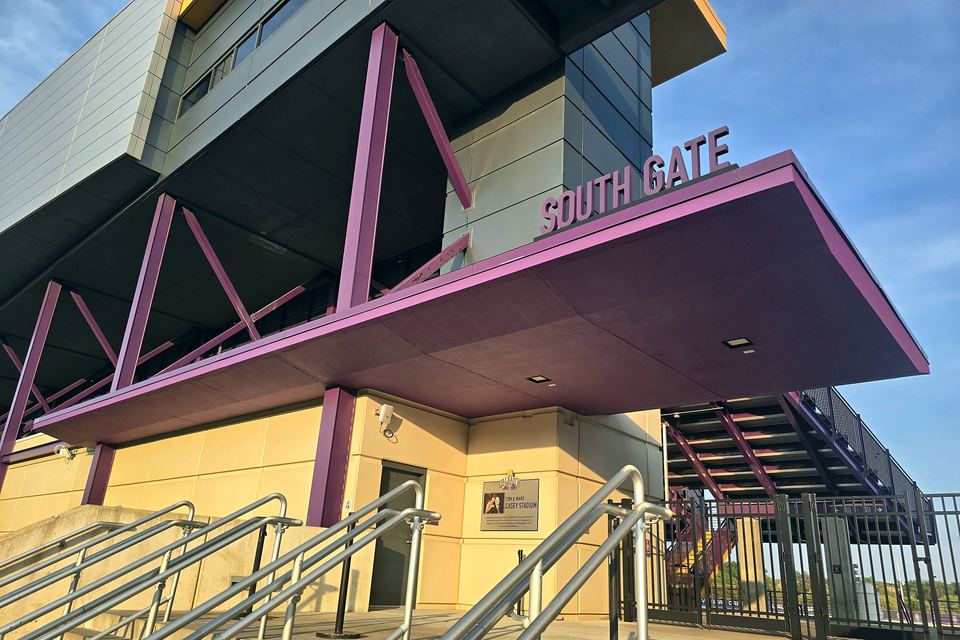
The South Gate canopy at UAlbany's Casey Stadium had a badly faded, chalky EIFS soffit. As part of our public-works painting contract in summer 2026, the surface was cleaned and repaired before any coating, then refinished with the color matched to the stadium's scheme, all on an active campus. The photos below show the same soffit in July and in August. Read the full Casey Stadium refinish. For other commercial buildings, see commercial EIFS and stucco.
When a repair can't be blended or the texture itself is worn, the finish coat is redone across the whole face. On the Shake Shack storefront's feature panel in Clifton Park in September 2026, the EIFS finish coat was removed and re-applied over the full panel in the brand's color, with scaffold access and canopy protection, rather than spot-patched. A full face looks like one surface; a patch on a colored panel never quite does.
Usually, yes. Sealant joints at windows, doors and transitions wear out long before the wall does; plan on replacing them every 10–15 years. With scaffold or a lift already in place for the recoat, it is the cheapest time to cut out the old sealant and put in new backer rod and compatible sealant. Recoating also waits for the weather, so read what can and can't be done in winter if you're planning late in the year.
The same EIFS canopy soffit at Casey Stadium: chalky and blotchy in July, one even color in August.
Look for cracks, soft spots, failed sealant and stains that point to water, so we never paint over a problem.
Low-pressure washing with cleaners suited to the finish, never a high-pressure blast.
Cracks, impact holes and loose areas repaired and blended into the texture.
Old sealant cut out and replaced with backer rod and compatible sealant at windows, doors and transitions.
Primer only where the coating maker calls for it on your type of wall.
Coating applied corner to corner across each elevation so there are no lap marks, in dry weather at about 40 °F and rising.
| Option | What it does | When it fits | What it won't fix |
|---|---|---|---|
| Clean only | Removes dirt, algae and chalk | The color is still even and the surface is sound | Fading, cracks or water behind the wall |
| Repair and recoat | Repairs first, then one even coat of a compatible coating | A sound wall with faded or patchy color | Wet substrate or a failed system |
| Refinish | A new textured finish coat over the base coat | Worn texture, or a repair that can't be blended into the old finish | Problems behind the base coat |
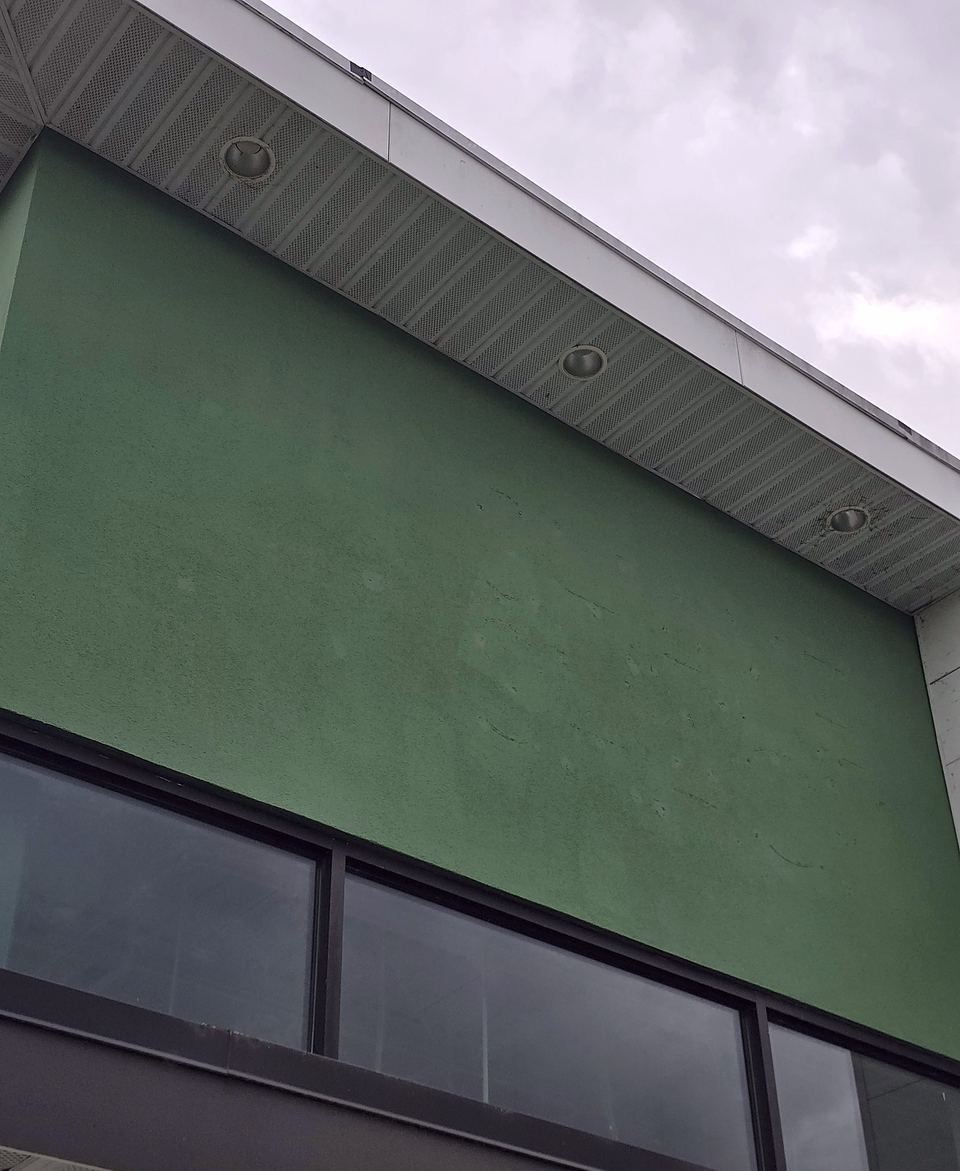
Cleaned, repaired and refinished the faded EIFS canopy soffit at the South Gate.
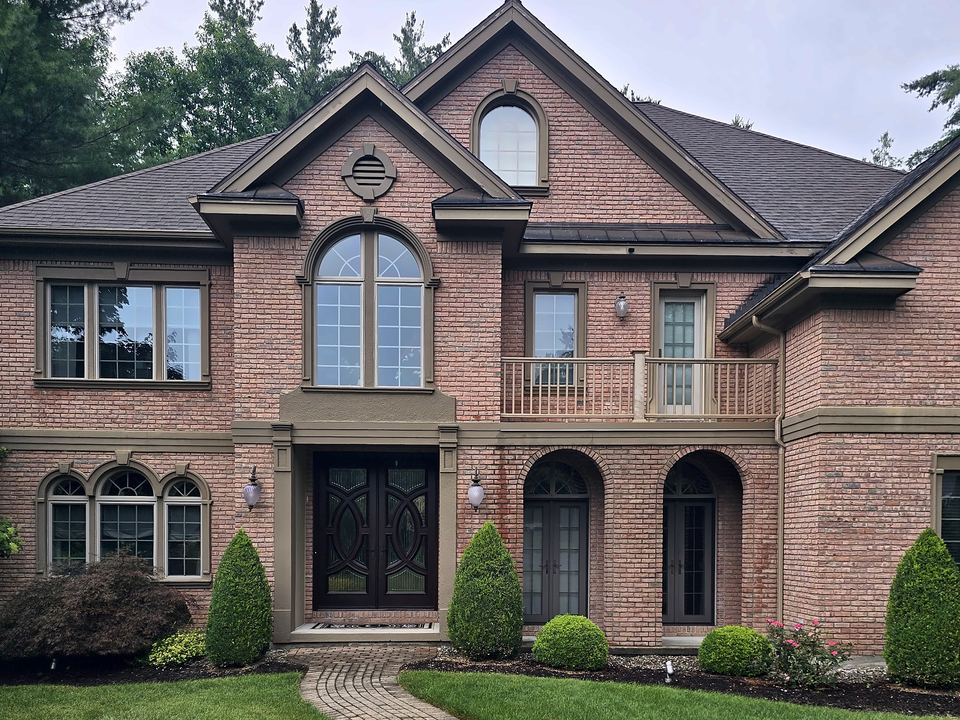
Repaired a cracked, water-damaged EIFS band, added a custom aluminum drip cap and waterproofed the balcony deck.
Yes, but only with coatings made for the system, after gentle cleaning and after cracks are repaired. Acrylic and compatible elastomeric coatings are the usual choices, applied to a clean, dry, sound wall. A coating that doesn't suit EIFS can trap moisture or peel. Done properly, a recoat gives one even color where a patch would show, and adds a fresh weather layer.
Only at low pressure. A high-pressure washer can cut into the finish, force water behind the system through cracks and joints, and damage the foam underneath. EIFS and stucco are cleaned with low pressure, a wide spray and cleaners suited to the finish, working from the bottom up and rinsing from the top down. Cracks and failed sealant are best fixed before any washing.
Yes. A recoat can change the color as well as refresh it. The one limit is how dark you can go on EIFS: very dark colors absorb a lot of heat from the sun, which can overheat the foam, so EIFS makers set limits on how dark a finish may be. We check your chosen color against the product before we start.
It can be. An elastomeric coating is thick and flexible, so it bridges fine hairline cracks and moves with the wall, which suits stucco with lots of small cracks. It won't fix loose stucco, wide cracks or water getting in behind the wall, so those are repaired first. On EIFS, only an elastomeric that is compatible with the system should be used.
There's no fixed schedule. Recoat when the color has faded or turned chalky, when patches no longer blend, or when the finish is wearing thin. Sun-facing and weather-facing walls usually need it first, so recoating one or two elevations at a time is common. On a wall that has faded for 15–20 years, a patch will show, and that is often the moment to recoat.
One photo of each side of the building, plus close-ups of any cracks or stains.
Faded wall? Send one photo of each side.
We'll tell you whether it needs a clean, a recoat or repairs first. We reply within one business day, Monday to Friday.