Home
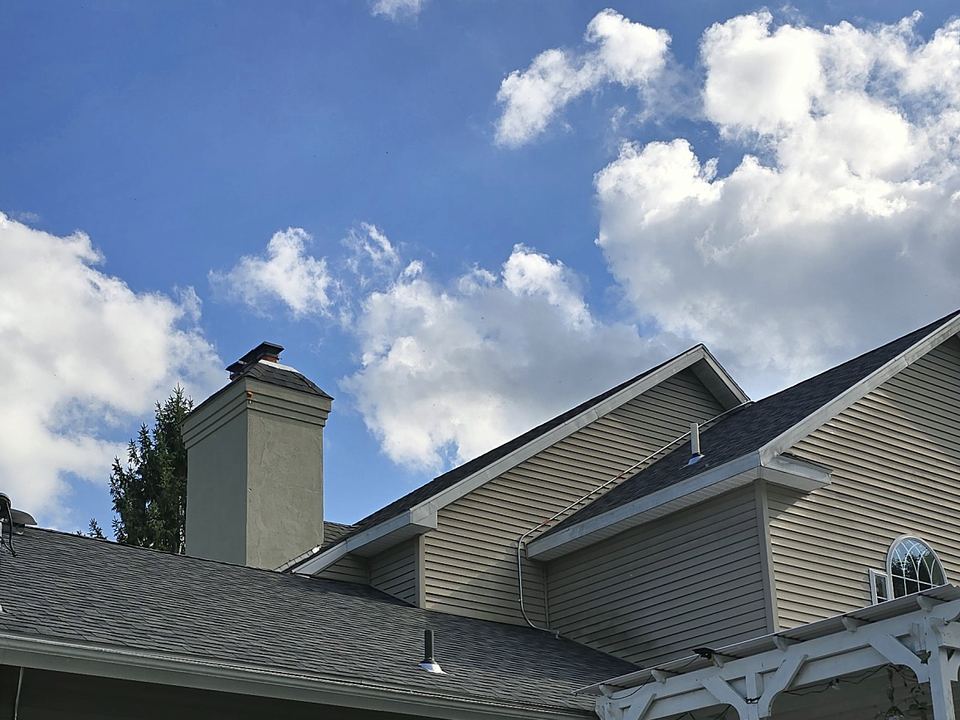
Chimney stucco and kick-out flashing, Niskayuna home
Traced a heavy-rain leak to missing kick-out flashing, re-flashed the roof-to-wall joint, rebuilt the stucco and refinished the wall.
Roof-to-wall leaks · Capital Region
Stains below a roof line, rot at a chimney, cracks under a band: most of it comes back to flashing that is missing or in the wrong order.
We reply within one business day, Monday to Friday.
Updated October 2026
Short answer
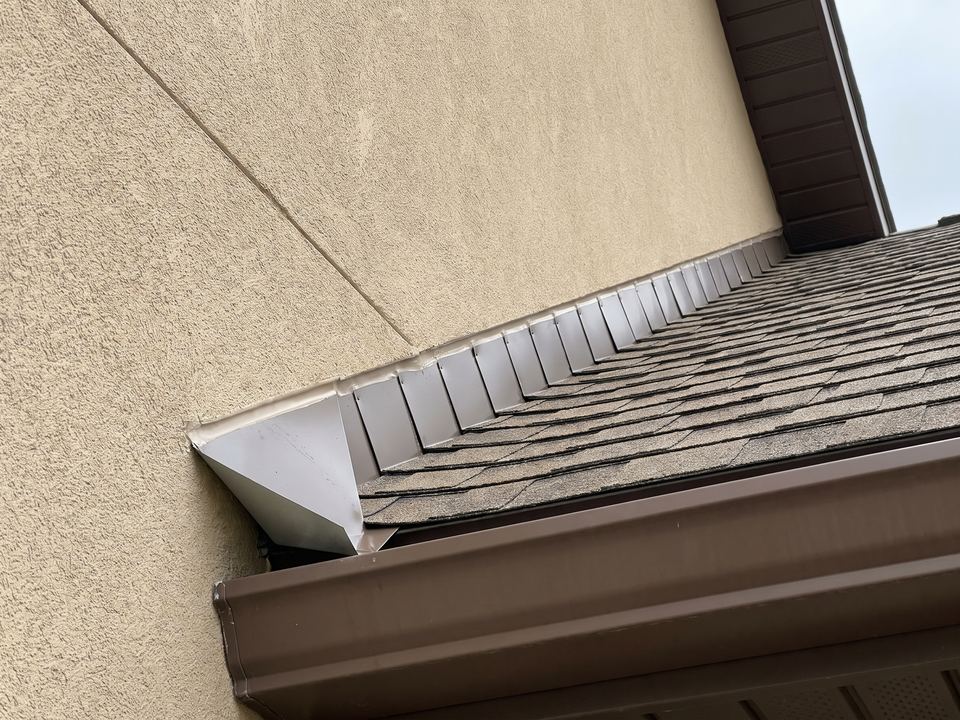
A kick-out flashing is a small angled piece of metal at the bottom of a roof-to-wall intersection that sends roof water into the gutter instead of behind the wall. Without one, water soaks stucco and EIFS walls for years. We add kick-outs, drip caps and roof-to-wall flashing across the Capital Region, then rebuild and refinish the wall. Start with a photo of the spot.
Key facts
AI-generated illustration
AI-generated illustration
Usually just below the point where the lower edge of a roof stops against a wall that keeps going down. Roof water runs along the flashing at that intersection, and at the bottom it needs to be turned out into the gutter. Without a kick-out, it pours onto the wall and into it. The same thing happens at:
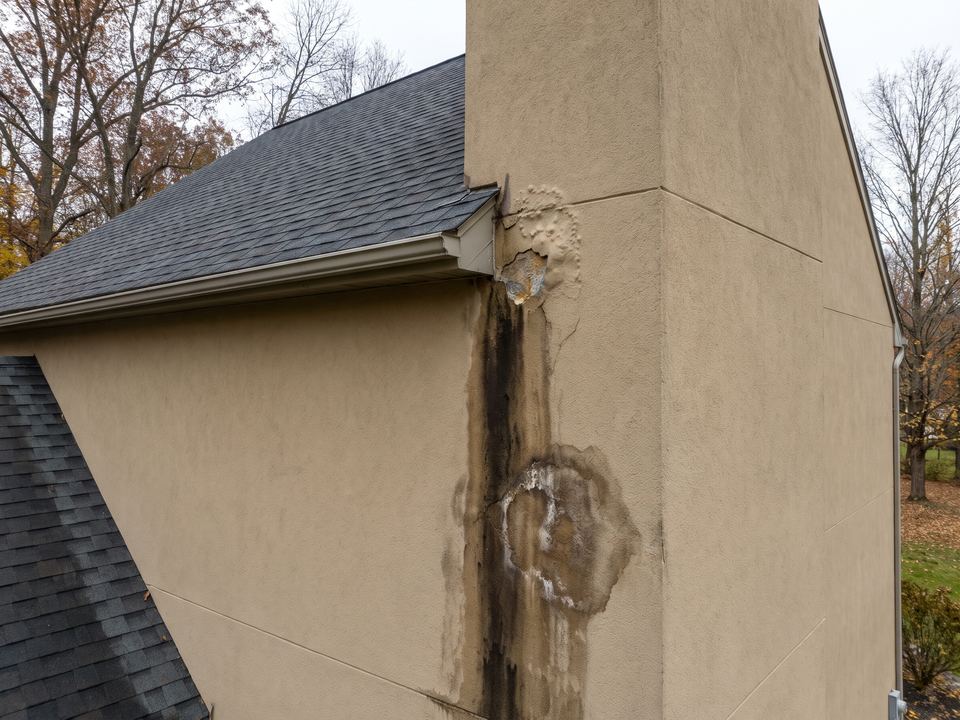
The signs are a dark stain or streak on the wall below the roof edge, cracked, bulging or soft finish in the same spot, rotted trim, and stains or peeling paint inside, often well below the leak.
Yes. The International Residential Code, which New York's residential code is based on, requires flashing that diverts water away where the eave of a sloped roof meets a sidewall (section R903.2.1). That diverter is the kick-out. It is easy to leave out when a roof is replaced or an addition goes on, so it is worth checking even on a newer roof. On new EIFS work, every roof-to-wall corner gets one; see new EIFS installation.
Because the kick-out and the flashing above it have to sit behind the stucco or EIFS, lapped with the weather barrier, not stuck on top of the finish. So we cut back the wall at the intersection, install the flashing in the right order, rebuild the layers and refinish. To keep the repair from showing, the new finish usually goes over the whole wall area, not just the patch. On stucco that means new lath and coats (stucco repair); on EIFS, new foam, mesh and base coat (EIFS repair).
The owners had bought the house a year earlier, and it leaked in heavy rain. The water was traced to a missing kick-out flashing at the roof-to-wall connection beside the stucco chimney. We removed the damaged stucco, installed new roof-to-wall and kick-out flashing with a drip edge, rebuilt the stucco at the new flashing, and put a fresh finish coat over the full wall area so the repair doesn't show. Once the wall was open, a small area of damaged EIFS turned up as well and was replaced under a change order. The job was completed in September 2026. Read the Niskayuna chimney job.
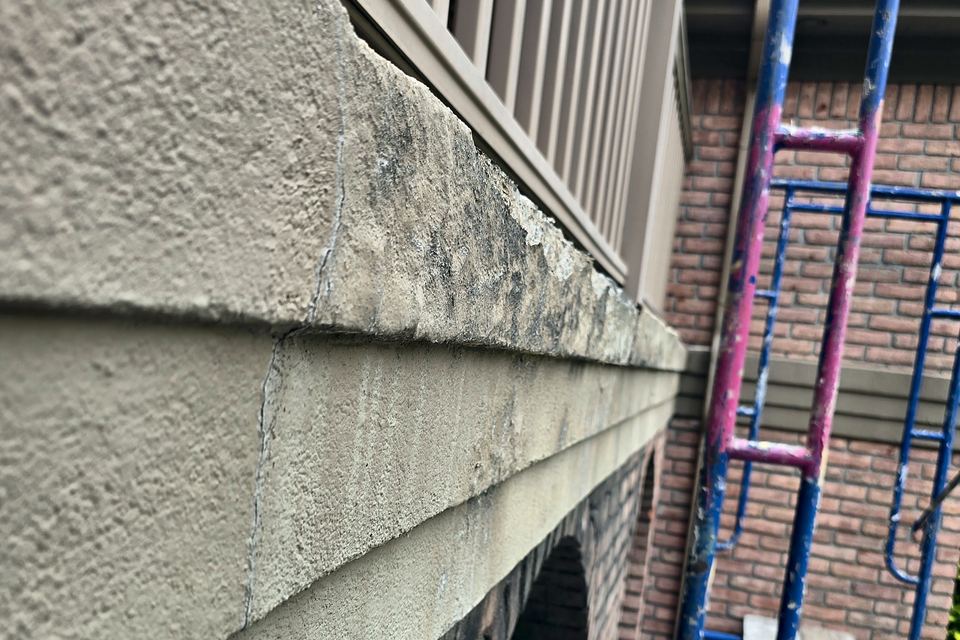
Yes, because anything that sticks out from the wall catches water on its top. On a house in Schenectady, water was getting in at an EIFS band over the front entry that had never had flashing, and the band had cracked and taken on water. We repaired the band and added a custom-fabricated aluminum drip cap, so the water now drips off the edge instead of soaking in. Read the Schenectady band repair.
Found the stain in late fall? The wall rebuild that follows a flashing repair needs the same 40 °F and rising as any finish work; our guide to EIFS and stucco in winter explains what can be done now and what waits for spring.
Find where the water gets in, not just where it shows: the roof edge, a chimney side, a window head or a band.
Cut back the stucco or EIFS at the intersection to sound, dry material.
Roof-to-wall flashing, the kick-out and a drip edge, lapped with the weather barrier so every layer sheds water down and out.
New stucco coats, or foam, mesh and base coat for EIFS, tied into the existing wall.
A fresh finish coat over the full wall area, so the repair doesn't show.
| Option | What it does | Result | When it's the right call |
|---|---|---|---|
| Caulk the gap | Seals the visible crack at the roof line | Temporary; roof water still runs behind the wall | Only to slow a leak until the real repair |
| Add a kick-out and repair the wall | Turns roof water out into the gutter at the bottom of the intersection | Fixes the most common roof-to-wall leak | Damage is local to the bottom of the roof line |
| Redo the full flashing | Replaces the roof-to-wall flashing, kick-out and drip edge along the whole intersection | Fixes leaks along the full length of the roof line | Stains or soft spots run the whole length, or there is no flashing at all |
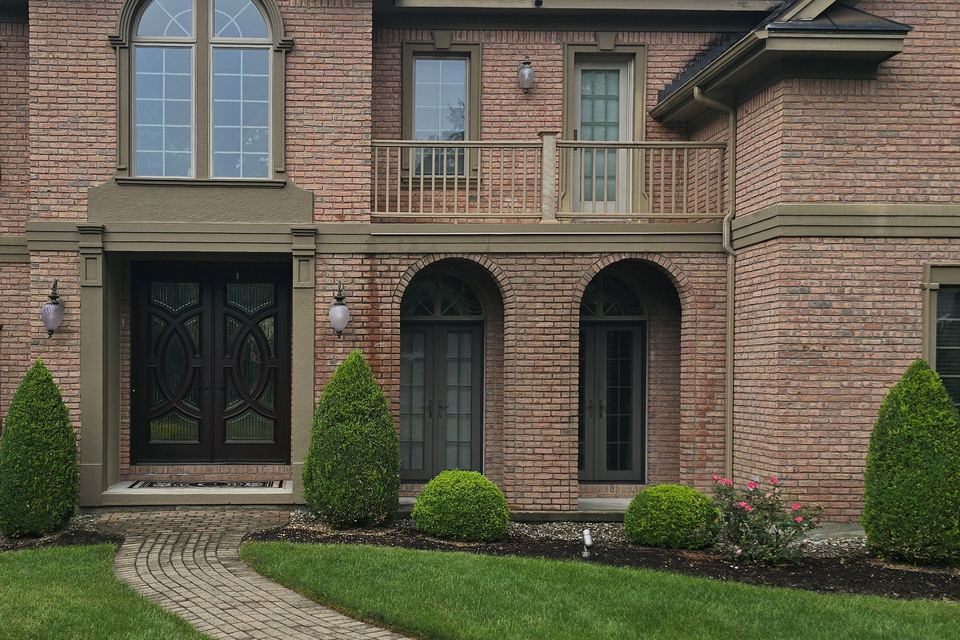
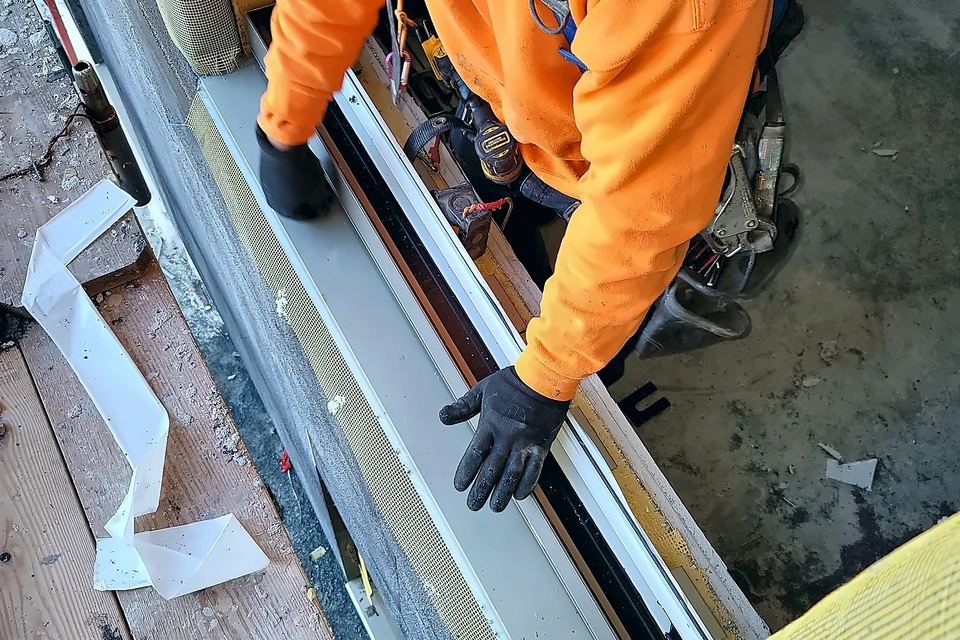
Traced a heavy-rain leak to missing kick-out flashing, re-flashed the roof-to-wall joint, rebuilt the stucco and refinished the wall.

Repaired a cracked, water-damaged EIFS band, added a custom aluminum drip cap and waterproofed the balcony deck.
A kick-out flashing is a small angled diverter at the bottom of a roof-to-wall intersection. It sends roof water into the gutter instead of letting it run down behind the stucco or EIFS. The International Residential Code requires one (section R903.2.1), and a missing kick-out is one of the most common causes of hidden rot in the wall below that corner.
Usually, yes, but the wall has to be opened at the intersection. The kick-out and the flashing above it sit behind the stucco or EIFS, lapped with the weather barrier, so we cut back that area, install the flashing, rebuild the layers and refinish. To keep the patch from showing, the new finish often goes over the whole wall area rather than just the repair.
Because water that gets behind a wall follows the framing and the sheathing down and sideways before it shows. A leak at a roof-to-wall corner can stain a ceiling or a window head well below it, or show only as soft spots on the wall outside. That is why we trace the water back to where it enters before we repair anything.
Caulk can slow a leak for a while, but it doesn't fix one. The water running down a roof-to-wall line needs to be turned out at the bottom, which only a kick-out does, and caulk across that joint can trap the water that is already behind the wall. Use it only to buy time until the flashing is corrected.
Usually both, and the wall side is often the bigger part. Shingles and step flashing are roofing work, but a kick-out only works when it is lapped behind the stucco or EIFS and the weather barrier, so the wall at that corner has to be opened, re-flashed and rebuilt in the right order. If the roof itself is near the end of its life, it makes sense to plan both repairs together.
Stand back far enough to show the roof edge and the wall below it, then add a close-up of any stain or crack.
Stain under a roof line? Send us a photo of it.
One wide shot of the roof meeting the wall and one close-up.