Which stucco problems do we repair?
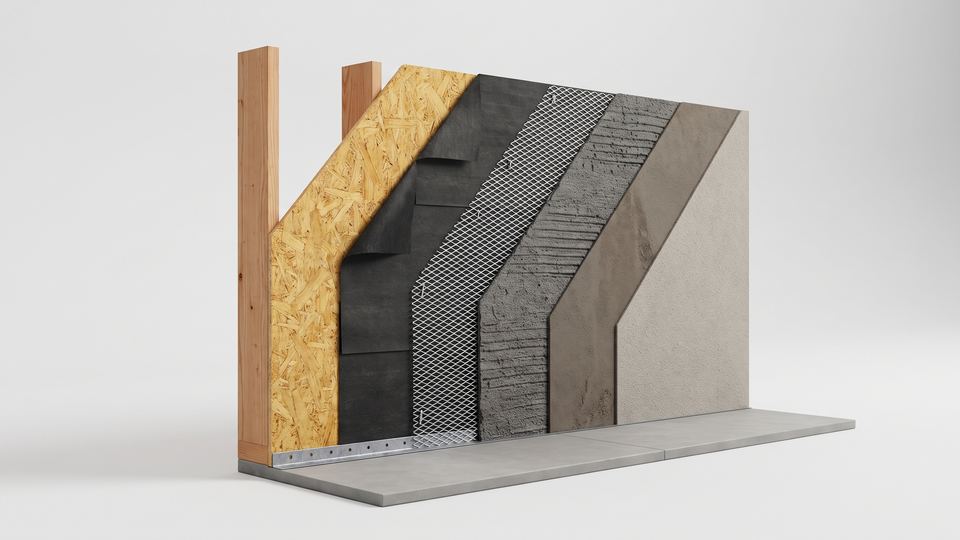
All of the common ones on hard-coat cement stucco:
- Cracks from settlement, freeze-thaw and missing control joints
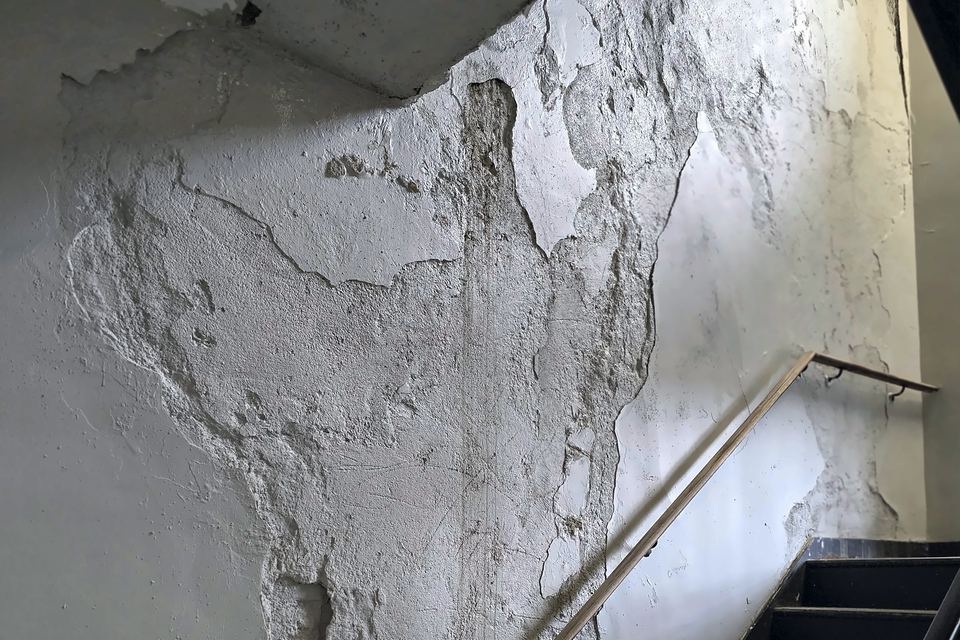
- Bulging or loose stucco and spalled corners
- Stucco on chimneys, and parging on foundations and site walls
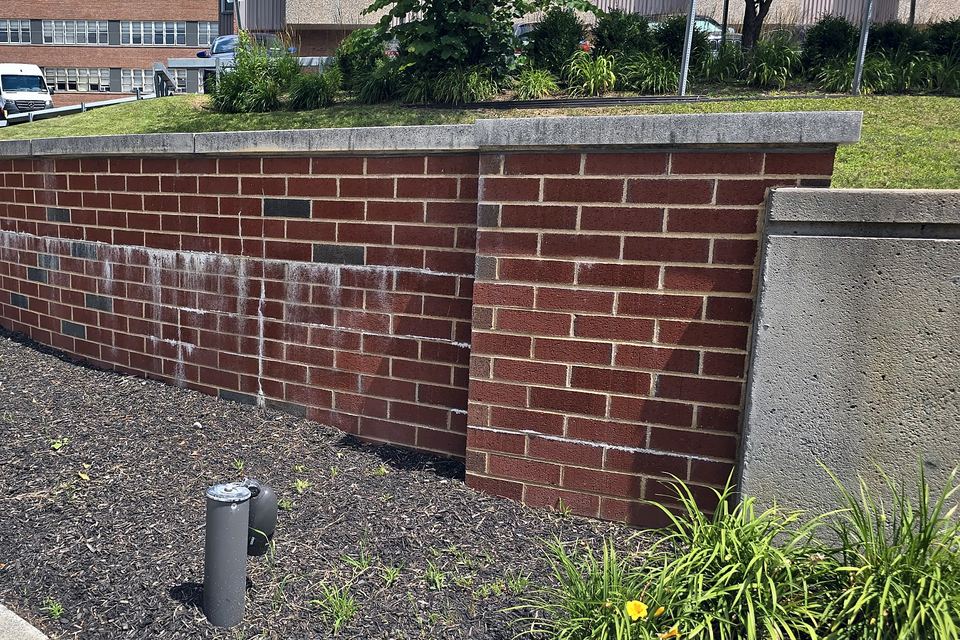
- Water staining and efflorescence
- Re-skim coats and a new finish over sound, old stucco
- Elastomeric coatings for walls with many fine cracks
Stucco and EIFS can look the same from the street. If yours sounds hollow when you tap it, it is probably EIFS, which is repaired differently: see EIFS repair and how to tell EIFS from stucco. On commercial buildings, in 2026 we repaired storefront stucco, block and EIFS at Stuyvesant Plaza in Albany, matched to two site colors, as a subcontractor to the general contractor; more on that kind of work on our commercial page.
Why does stucco crack in the Capital Region?
Mostly movement and water, made worse by freeze-thaw. Cement stucco is hard and doesn't stretch, so it cracks where the building moves: at the corners of windows and doors, at floor lines, and across long walls that have no control joints. Here, water that gets into a crack freezes, expands and opens the crack a little more each winter. Fine hairline cracks are common and are often cosmetic. Wider cracks, cracks that are growing, and cracks with stains below them need the cause found before they are patched, because the cause is usually water or a missing joint.
Why does chimney stucco fail first?
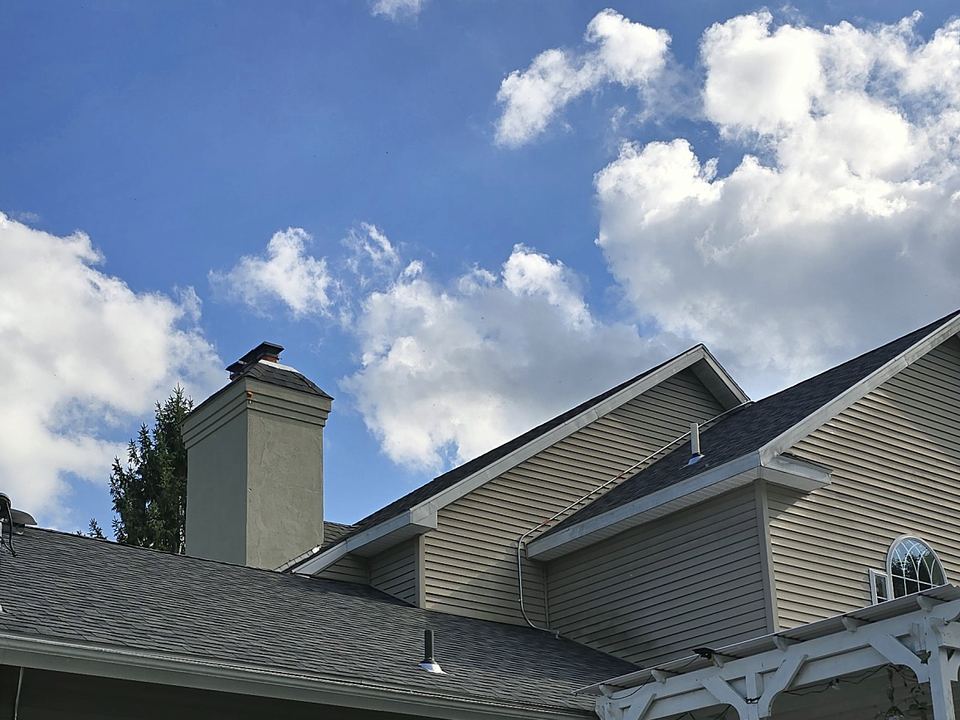
Because a chimney takes the worst weather on the house, and the flashing around it is where water starts. Stucco-covered chimneys get rain and freeze-thaw on every side, and the joints where the chimney or a nearby wall meets the roof are easy to get wrong. We check the crown and flashing at the same time as the stucco, because that is usually where the water starts.
In Niskayuna in 2026, leaks in heavy rain were traced to a missing kick-out flashing at the roof-to-wall connection beside a stucco chimney. We removed the damaged stucco, installed new roof-to-wall and kick-out flashing with a drip edge, rebuilt the stucco and refinished the whole wall so the repair doesn't show. Read the Niskayuna chimney job, or see how kick-out flashing repair works.
Can foundation parging be repaired?
Yes. Cracked or loose foundation parging is patched, re-skimmed and sealed. Parging is a thin cement coat over a block or concrete foundation wall; it protects and finishes the wall, but it isn't waterproofing. It lasts longest when roof water and wet soil are kept away from it, so we look at the gutters, downspouts and grade at the same time.
Is a faded or stained stucco wall a repair or a recoat?
If the stucco is sound, it is usually a recoat. Stains, uneven color and chalky, faded finishes on solid stucco are cleaned and recoated; elastomeric coatings suit walls with lots of fine hairline cracks. See recoating and refinishing. If the stain comes back or sits below a window or roof edge, there is water behind it, and that gets fixed first. The same goes for other masonry: in August 2026 we repaired water-damaged cement plaster in a stairwell of a downtown Albany building, on the same job as new parapet flashing above it, and in July we removed efflorescence from brick retaining walls in Schenectady. Cement stucco also has a season: our guide to stucco and EIFS work in winter explains the 40 °F rule.